
Our client
Winchester Cathedral needed a campaign that could explain a major conservation project clearly and help raise funds for urgent repair work. The South Nave Aisle had been affected by centuries of weathering, pollution, changing temperatures and earlier repairs using hard cement mortar. The campaign needed to show what was at risk, why the work mattered and how supporters could contribute.
What was created
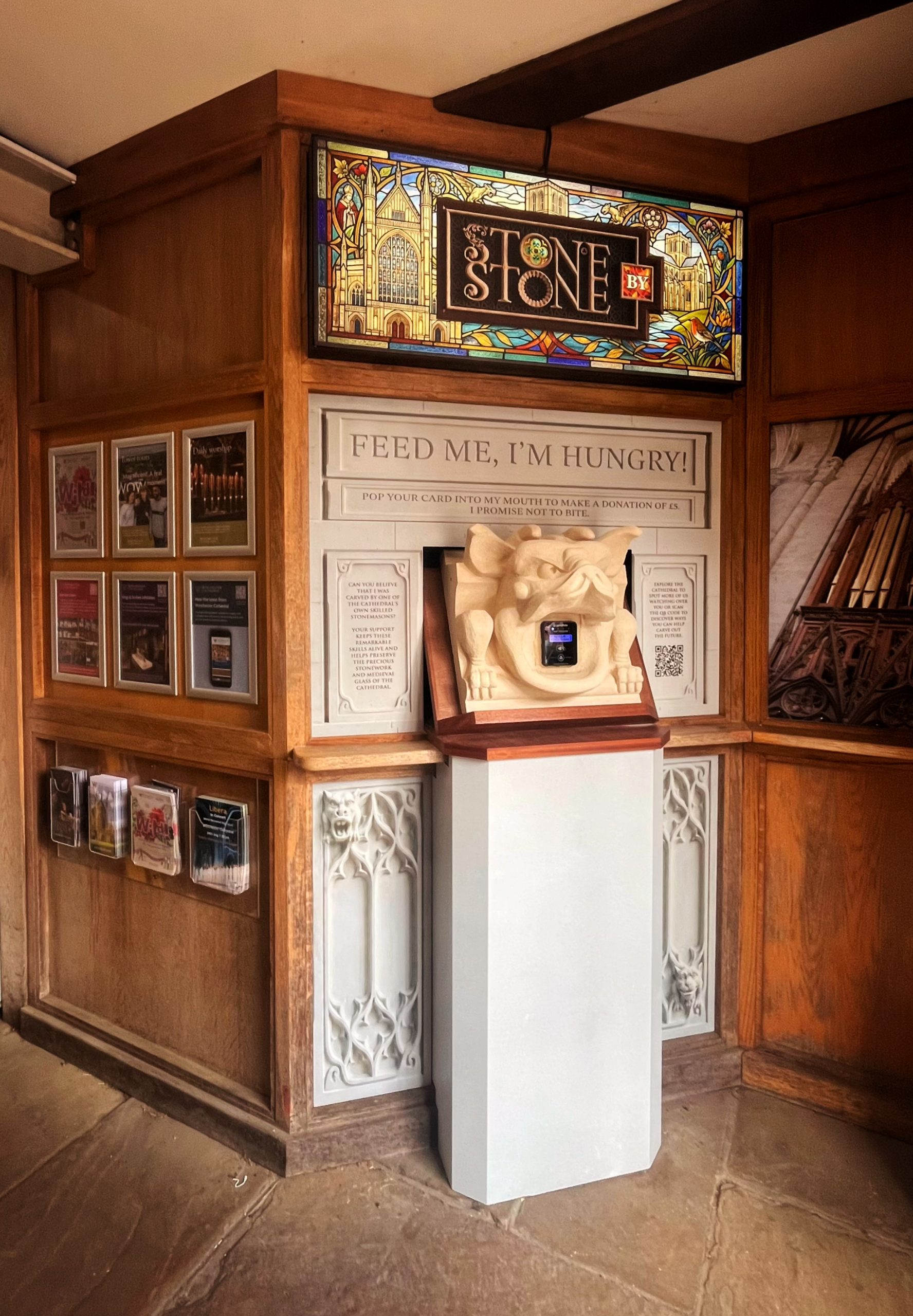
Beyond developing the brand identity, logo, and printed materials for Stone by Stone, I wanted to create a unique, lasting feature that resonated with the Cathedral. Working alongside master craftsman Chris—who carved the stunning stone centrepiece—I designed a striking trompe-l’oeil portal featuring a custom gargoyle equipped with a modern contactless donation reader.
How we worked
Like any authentic brand, the identity grew from direct conversations with the project’s key stonemasons, Ross and Chris. They are part of a living lineage of passion and craftsmanship. For them, it is not about the past versus the present, but a continuous devotion to ensuring the Cathedral stands proudly and safely for every visitor.
During the process, they walked me through the building’s diverse architectural styles, demonstrating how shape and design integrate into this spectacular structure. Ultimately, the final identity reflects and celebrates these key architectural trends spanning nearly a thousand years.”
The work had to respect the scale and history of Winchester Cathedral while giving the appeal a clear and recognisable form. It also had to support a practical donor journey, from first understanding the conservation need through to choosing a level of giving.
The central idea came from the work itself: skilled conservation, carried out slowly and carefully, stone by stone. I worked closely with senior leaders at the Cathedral to understand the fundraising objectives, the audiences and the tone the campaign needed. I also worked with the Cathedral’s stonemasons, whose craft is central to the project. Their knowledge of the building, the materials and the repair process shaped the visual and verbal approach.
The finished campaign uses strong typography, close-up photography, heritage colour and a direct fundraising structure. The flyer explains the conservation challenge, introduces the South Nave Aisle work and sets out giving levels from £500 to £10,000. It also gives supporters a clear reason to take part, including the opportunity to sponsor a stone, support specialist craft skills and, at some giving levels, receive recognition linked to the project.
A key part of the campaign was making the appeal personal without losing the seriousness of the conservation work. The material includes the story of Reverend Canon Gary Philbrick, whose initials were carved into the rear face of a replacement stone after a bequest to the Cathedral. This helped show how giving could become part of the building’s continuing history.
Stone by Stone is now giving Winchester Cathedral a clear platform for fundraising and public engagement. For my practice, the project shows how identity and campaign design can help a heritage organisation explain a complex need, build trust with supporters and make a long-term conservation programme easier to understand and support.